


AI-Native Wireless: Designing Networks that Learn

Date

May 22 2026

Time

11:00 am - 12:00 pm

Labels

Main Event Hall A

Location

Pavilion 15 Thessaloniki International Fair
Egnatias 154, TIF, Thessaloniki 546 36
Website
https://thessalonikifair.gr/el

AI-native wireless is the concept that future wireless networks will be built to learn and adapt, so connectivity becomes smarter, more reliable, and more responsive as conditions change. In this open roundtable, we’ll discuss the real-world impact of this shift: how ultra-low latency can enable safer, interconnected vehicles and the remote control of machines, how higher reliability and smarter coverage can support telemedicine, emergency response, and critical services that are always available, how more efficient use of spectrum can enable large-scale sensing and smart city infrastructure, and how energy-aware networking can make large-scale IoT deployments practical and sustainable. Throughout the discussion, we will maintain a technical focus, addressing questions such as what “networks that learn” actually means, what needs to happen across the radio access network and the wider system, and what challenges still stand in the way, including trust, security, privacy, and robustness. The goal is to have a future-focused conversation that is grounded in applications that people can envision while still providing a clear sense of the technological choices that will determine what becomes possible.


Moderator: Prof. George Karagiannidis, ECE AUTH

Who the
Speakers are:

Speakers

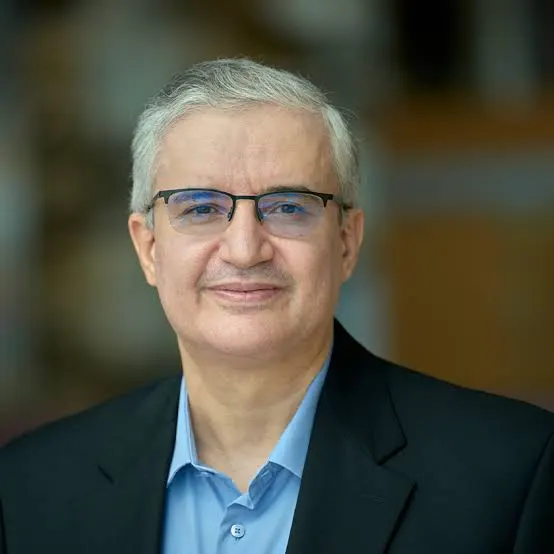
  • Merouane Debbah
    Merouane Debbah
    Professor at Khalifa University

    Merouane Debbah is a researcher, educator, and technology entrepreneur, currently a Professor at Khalifa University and founding Senior Director of its Digital Future Institute. His work spans AI, large language models, wireless communications, and random matrix theory, contributing to key technologies such as small cells (4G), Massive MIMO (5G), and Large Intelligent Surfaces (6G). He has received 50+ IEEE best‑paper awards, holds 100+ patents, and played a leading role in developing major AI systems including NOOR and Falcon LLM, positioning the UAE as a global AI leader. https://www.ku.ac.ae/college-people/merouane-debbah , https://scholar.google.com/citations?hl=en&user=HU5I0X4AAAAJ

  • Mohhamed-Slim Alouini
    Mohhamed-Slim Alouini
    Al‑Khwarizmi Distinguished Professor of Electrical and Computer Engineering at KAUST

    Mohhamed-Slim Alouini is the Al‑Khwarizmi Distinguished Professor of Electrical and Computer Engineering at KAUST, where he also holds the UNESCO Chair on Education to Connect the Unconnected. His 30‑year career focuses on the modeling, design, and performance analysis of wireless, optical, satellite, and integrated space-air-ground communication systems, with major contributions to MIMO, diversity techniques, and next‑generation connectivity for underserved regions. He is an IEEE, OPTICA, and SPIE Fellow, co‑author of the influential textbook Digital Communication over Fading Channels, and a recipient of numerous international awards recognizing his impact on wireless communications. https://www.kaust.edu.sa/en/study/faculty/mohamed-slim-alouini , https://scholar.google.com/citations?hl=en&user=HqIyyXcAAAAJ

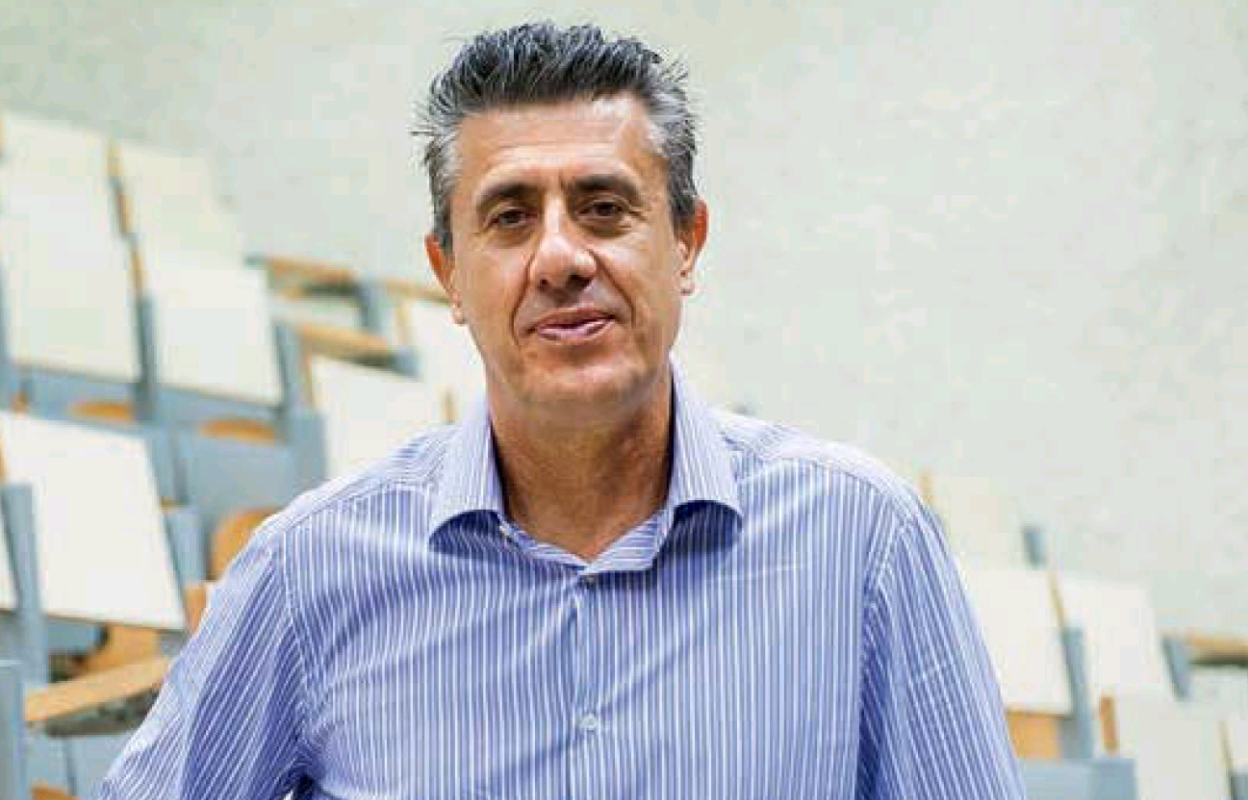
  • George Karagiannidis
    George Karagiannidis
    Professor at Department of Telecommunications, Aristotle University

    George K. Karagiannidis was born in Samos in 1963. From 1990 to 1997 he worked as a freelancer engineer in electromechanical projects. From 2001 to 2004 he was a Researcher at the National Observatory of Athens, Greece, in the field of Satellite Communications. He has given more than 100 lectures in foreign universities and forums and has been awarded many times for his contribution to telecommunications with major international scientific awards such as the 2021 IEEE Communications Society Radio Communications Committee (RCC) Technical Recognition Award, 2018 IEEE Signal Processing and Communications Electronics (SPCE) Technical Recognition Award and recently with the prestigious 2022 Humboldt Research Award from the Alexander von Humboldt Foundation in Germany. He is one of the most influential scientists worldwide and the only Greek Academic in the field of computer science and telecommunications to be named as a Web-of-Science Highly Cited Researcher for the last 8 consecutive years (2015-2022).