


Speakers
-
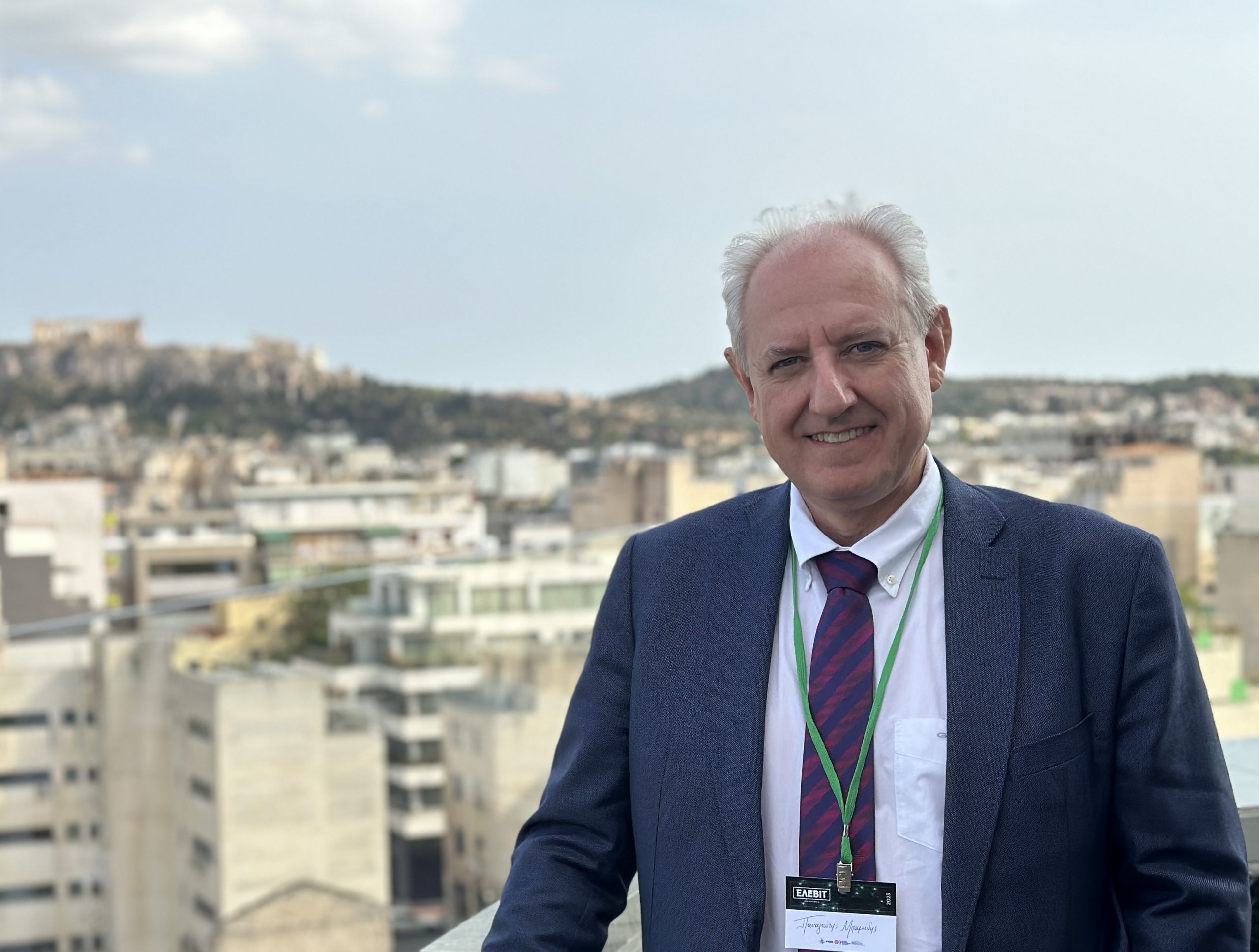 Panagiotis BamidisProfessor of Medical Physics and Informatics in Medical Education in the Medical Physics Lab of the School of Medicine at the Aristotle University of Thessaloniki (AUTH)
Panagiotis Bamidis is a Professor of Medical Physics and Informatics in Medical Education in the Medical Physics Lab of the School of Medicine at the Aristotle University of Thessaloniki (AUTH), Greece. He designs, implements and evaluates IT and Assistive Technologies systems that improve everyday activities of elderly or other vulnerable groups and improves their health or life quality or improves the education and training of health professionals. He conducts research that attempts to understand how the brain reacts to different stimuli, technological or educational interventions, as well as, the development and evolution of human emotions and sleep transitions. He is the co-ordinator of large European projects, and the principal investigator for many national and international funded projects. He is the President of the Hellenic Biomedical Technology Society (ELEBIT), the HL7 Hellas organisation, the international Society of Applied Neuroscience (SAN), a member of the Administration Boards of other societies and patient associations. He is/has been the Chairman/Organiser of more than 19 international conferences and several national Biomedical Technology conferences. Since 2012 he has established LLM Care ecosystem (www.llmcare.gr), the business exploitation of the LLM project, which is a 2-star reference site of the EIP-on-AHA. In 2013 he established the Active and Healthy Ageing Living Lab in Thessaloniki (ThessAHALL; http://www.aha-livinglabs.com/) which in 2016 became an adherent and in 2018 an effective member of the European Network of Living Labs (ENoLL). In 2017, he became a visiting Professor of Medical Education Technology, Innovation and Change for the Leeds Institute of Medical Education (LIME) of the University of Leeds, UK. He received Prizes for the Best Track Record in funded research projects (AUTH Research Committee 2009; AUTH Dean of Health Sciences 2016) and the Best overall high/extra-ordinary academic performance (AUTH Dean of Health Sciences 2018, 2019, 2020). In 2020, as a result of the H2020 funded project named CAPTAIN, he founded CAPTAIN-COACH, one of the first 10 spin-offs of AUTH.
His research interests are within technology enhanced learning in Medical Education (web2.0, semantic web and open linked data, serious games, virtual patients, PBL and scenario based learning, learning analytics), Affective and Applied Neuroscience, Affective and Physiological Computing, multimodal interaction and HCI, Health Information Management, Bio-medical Informatics with emphasis on neurophysiological sensing, signal analysis, and imaging of human emotions. He is also actively researching Assistive Technologies for Active and Healthy Ageing, as well as, special education/developmental disorders, and silvergaming/exergaming/silver-science and the associated use of semantic technologies and IoT. -
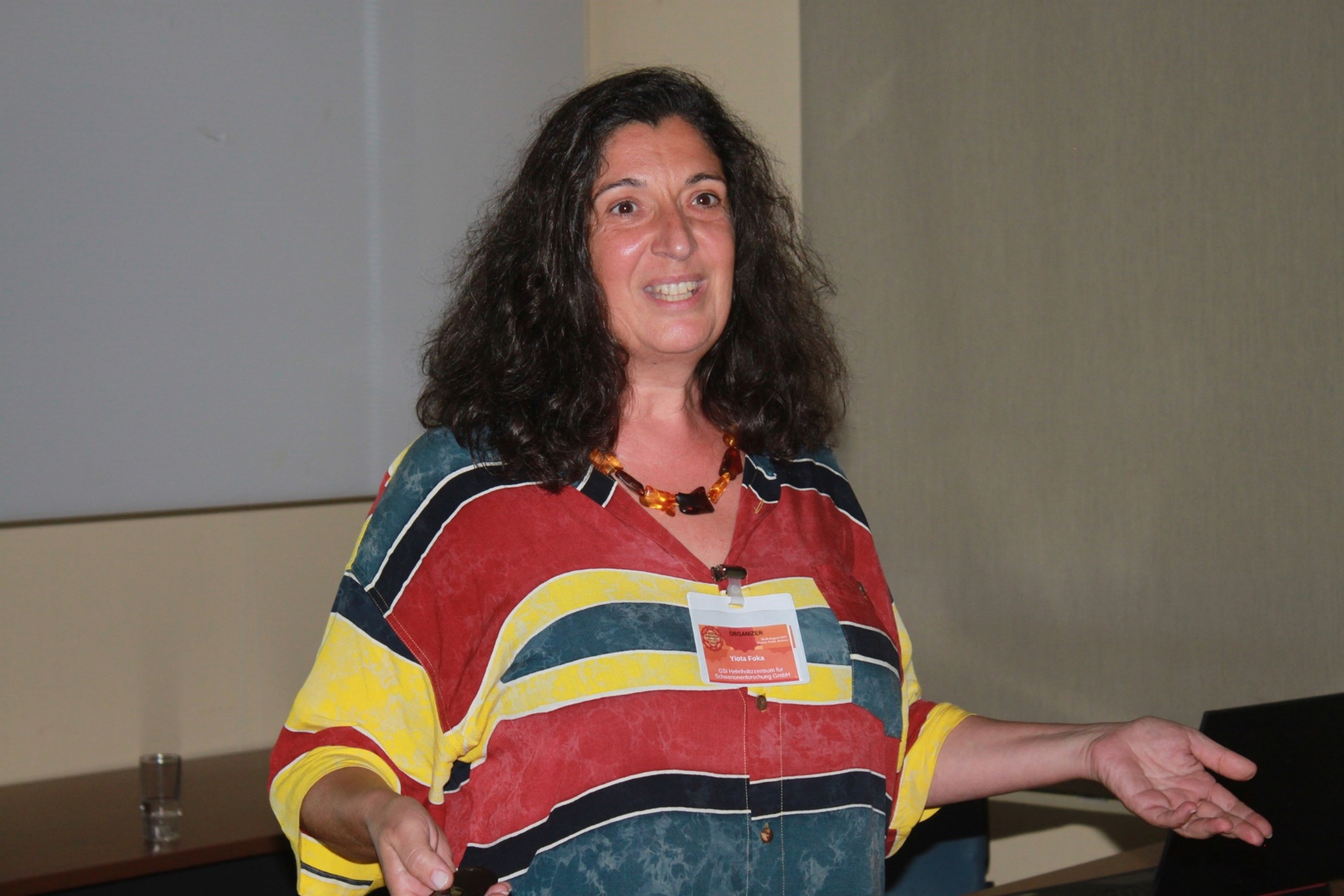 Panagiota FokaGSI Senior Research Scientist
Foka is a senior researcher working at the European Laboratory for Particle Physics, CERN, Switzerland, delegated by her home institute, GSI, the Heavy Ion Research Centre at Darmstadt, Germany, where she holds a permanent position since 2000. PhD in physics, received in 1994, at the University of Geneva (first measurements of enhanced production of strange particles confirming theory predictions for energetic heavy-ion collisions). Her career, including a postdoctoral position at the University of Geneva and a Marie Curie fellowship in Frankfurt, was mostly developed within the ALICE experiment at the CERN LHC, studying the properties of matter created in energetic particle collisions, where she also served in management positions such as deputy physics coordinator, outreach coordinator, system coordinator for data quality monitoring and event display, responsible for large collaboration documents (technical, physics performance reports). Also, she is a member of the ALICE TPC detector and offline groups. Long list of publications in major peer-reviewed physics journals spanning from experiments articles and reports as co-author of ALICE, WA98, NA49, NA35 heavy-ion experiments to a few authors reviews; and editor of several volumes of conference proceedings. The last few years involved in medical applications and the development of a next generation ion facility for tumour cancer therapy research with ions. Active in the dissemination of information on scientific advances via the organization of conferences and seminars, and via educational outreach activities (member of the steering committee of the international particle physics masterclasses and outreach group since 2000; development and overall coordination of the new particle therapy masterclass since 2019); conscious of the need to enhance awareness of benefits to society from fundamental research.