

Aspects of Gender from Antiquity to the Era of AI

Date

May 18 - 19 2026

Time

2:00 pm - 8:00 pm

Labels

Satellite Event

Location

Central Library Hall, Aristotle University of Thessaloniki
Central Library AUTH, Thessaloniki 541 24

This workshop explores conceptions, representations, and practices of gender from antiquity to the contemporary era of artificial intelligence. Taking a long historical and theoretical view, the workshop invites participants to reflect on how ancient frameworks of gender have been constructed, transmitted, challenged, and reconfigured across time—and how they continue to inform, explicitly or implicitly, modern philosophical, social, legal, and technological discourses.

By bringing together Classical Philology, Ancient to Modern History, Philosophy, and the Social Sciences (including Anthropology, Psychology, and Constitutional Law), the workshop aims to foster interdisciplinary dialogue on gender as a category of analysis, experience, and power. Particular attention will be given to questions of continuity and rupture: what survives from ancient thought, what is transformed, and what is radically new in the age of algorithmic reasoning and AI-mediated social structures.

We welcome papers that engage with gender from antiquity to the present, including—but not limited to—the following themes:

  • Gender in ancient literary, philosophical, historical, and legal texts
  • Ancient theories of sex, body, and difference
  • Gender, normativity, and social order in antiquity
  • Reception of ancient gender concepts in later philosophical, political, or legal thought
  • Gender, authority, and expertise from classical traditions to modern institutions
  • Feminist, queer, or intersectional readings of ancient sources
  • Gender in constitutional, psychological, sociological, or anthropological perspectives
  • Gender, agency, and representation in digital culture and AI
  • Continuities and discontinuities between ancient epistemologies and AI-driven models of the human


The workshop is designed as an intensive, discussion-oriented event and will take place as a satellite session of the conference Aristotle Innovation Forum: From Aristotle to AI.


See more: AIF Gender Symposium Agenda


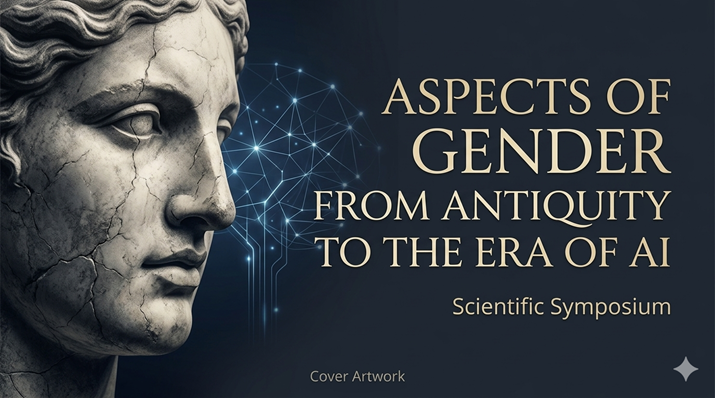
Symposium Poster
Who the
Speakers are:

Speakers

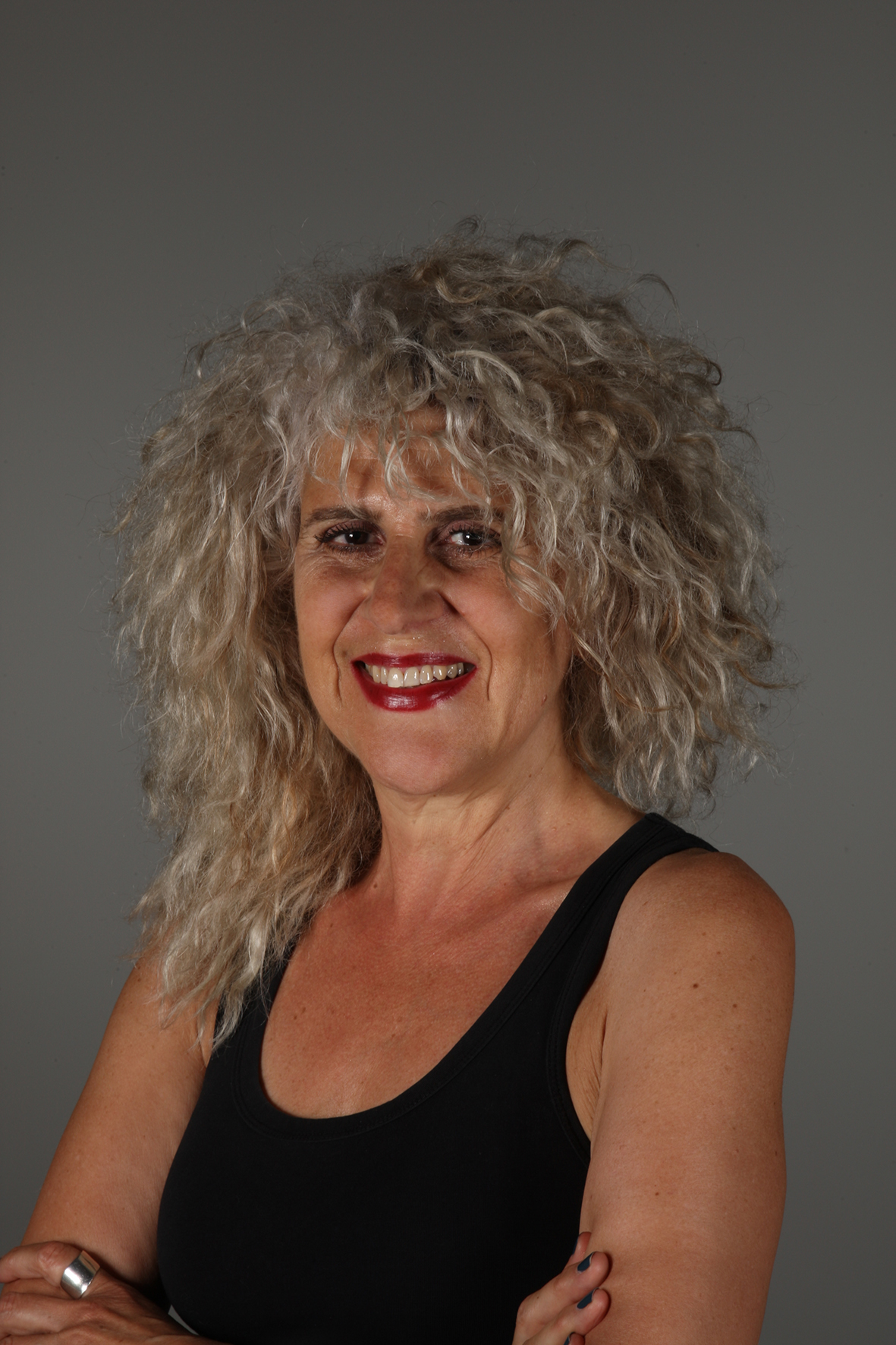
  • Konstantinos Diados
    Konstantinos Diados
    PhD in Byzantine History Aristotle University

    Dr. Konstantinos Diados studied History and Archaeology and Law at the Aristotle University of Thessaloniki (AUTh). He holds postgraduate degrees in Byzantine History and Legal Theory, and earned his PhD in Byzantine History from the same institution. His research interests include the relationship between eunuchs and political power in Byzantium, the History of Law, and Sigillography.

  • Georgios Kraias
    Georgios Kraias
    Visiting Professor Department of Studies in Greek Culture of the Hellenic Open University

    Georgios Kraias (born 1981 in Serres/Greece) graduated from the Department of Philology of the Aristotle University of Thessaloniki (2003) and received his doctorate in philosophy from the Albert-Ludwigs-Universität Freiburg (2008) – thesis title: Epische Szenen in Tragischem Kontext: Untersuchung zu den Homer-Bezügen bei Aischylos, Frankfurt am Main: PeterLang Verlag 2011. He is also a graduate of the Department of German Language and Philology of the Aristotle University of Thessaloniki (2026). Since 2016 he is teaching at the Department of Theatre Studies of the Open University of Cyprus and since 2017 at the Department of Studies in Greek Culture of the Hellenic Open University. His research fields extend from Classical Studies to Modern Greek and Linguistic Studies, and his main body of work is located in ancient Greek tragedy and its reception. His works have been published in domestic and international journals (Ellinika, Logeion, Paravasis, Parnassos, Platon, Scene, Philologiki, Philologos, Philosophein, QUCC, Wiener Studien) and have been included in the proceedings of Panhellenic and international conferences. He is currently preparing a monograph on Heiner Müller’s plays on ancient themes.

  • Iraklis Stratakis
    Undergraduate of Philology at the Aristotle University of Thessaloniki

    Iraklis Stratakis is an undergraduate of Philology at the Aristotle University of Thessaloniki, specializing in medieval and modern Greek studies. His research interests include 19th century Greek literature and comparative literature.His current work explores the interdisciplinary intersections between classical literary narratives and contemporary Artificial Intelligence, with a focus on gender performativity and the construction of authority.

  • Anastasia Pantazopoulou
    Anastasia Pantazopoulou
    Postdoctoral Researcher at Aristotle University of Thessaloniki

    Anastasia Pantazopoulou is a Postdoctoral Researcher at Aristotle University of Thessaloniki. She earned her PhD in Classical Studies from the University of Florida, as well as an MA in Classics and a BA in Greek Philology from Aristotle University. Her research interests lie in the areas of Greco-Roman drama, classical reception, and digital humanities. Her current research project focuses on creating an interactive open-access educational platform that digitally maps and documents the multicultural reception of Euripides’ Medea on the modern theatrical stage.

  • Elisa Daga
    Elisa Daga
    Postdoctoral fellow at the Italian Archaeological School at Athens

    Elisa Daga obtained her PhD from the University of Pisa in 2024 with a dissertation on the so-called “prayers for justice”, offering the first corpus of these inscriptions and a historical interpretation of the crimes denounced in them. She is preparing the dissertation for publication as a monograph. Currently she is a postdoctoral fellow at the Italian Archaeological School at Athens. Her research is grounded in epigraphy and includes Spartan dedicatory practices, Hellenistic informal justice and economic practices, especially deposits and loans of textiles, as well as the relationship between literary representations and epigraphic evidence for women’s access to networks of philia.

  • Eleni Tounta
    Eleni Tounta
    Professor of Western Medieval History in the Department of History and Archaeology at the Aristotle University of Thessaloniki

    Eleni Tounta is Professor of Western Medieval History in the Department of History and Archaeology at the Aristotle University of Thessaloniki. She pursued her under- and postgraduate studies in Greece, Belgium, and Germany. Her research focuses on the German kingdom and the Kingdom of Sicily during the High and Late Middle Ages, exploring topics of social and cultural history, as well as the interactions between the medieval West and the Byzantine Empire. Currently, she is engaged in research on travel writing, the formation of early ethnographic discourses, and colonialism in the late medieval eastern

  • Martina Obino
    Martina Obino
    MA in Classical Philology, University of Turin

    Martina Obino holds an MA in Classical Philology from the University of Turin, with a thesis focusing on female sanctity in Gregory of Tours’ Miraculorum Libri. She has also a second MA in Modern Philology, specializing in Italian lexicography. She is a teacher of Latin and Ancient Greek at the high school level. Her published work includes contributions to the Archivio per il vocabolario storico italiano (Vols. III and VI, 2020/2023) and the Piccolo vocabolario dei sardismi in italiano (Cagliari, 2025)

  • Achilles Valetopoulos
    Achilles Valetopoulos
    PhD student in Classical Studies at the University of Florida

    Achilles Valetopoulos is a PhD student in Classical Studies at the University of Florida, where he teaches introductory Latin and serves as a teaching assistant for courses on Classics. He holds a BA in Classical Studies from Aristotle University of Thessaloniki, where he graduated as valedictorian of the School of Philology (Class of 2024). His research interests include Ancient Greek and Latin comedy and satire, as well as gender and identity studies as applied to classical languages, alongside digital approaches to classical scholarship. His work is supported by honors including the Anastasia Vyzopoulou Award (Aristotle University of Thessaloniki) and the Rothman Fellowship (University of Florida).

  • Evangelia Patera
    Evangelia Patera
    Historian and a teacher of Greek language and history in secondary education

    Evangelia Patera is a historian and a teacher of Greek language and history in secondary education. She is a PhD candidate at the Department of History and Archaeology of the Aristotle University of Thessaloniki, specializing in Ancient Greek, Roman, Byzantine and Medieval History. She holds a master’s degree in History and Archaeology in the same field, which is the basis of her doctoral research, as well as a master’s degree in Theology (Ecclesiastical History). Her research focuses on historical studies in the Ancient Greek, Roman and Byzantine worlds, with a particular interest in historiography and history teaching. She has extensive teaching experience in secondary education since 2003 and is actively involved in innovative

  • Andromache Karanika
    Andromache Karanika
    Professor of Classics at the University of California, Irvine.

    Andromache Karanika is Professor of Classics at the University of California, Irvine. She is the author of Voices at Work: Women, Performance and Labor in Ancient Greece (Johns Hopkins University Press, 2014) and Wedding, Gender and Performance in Ancient Greece (Oxford University Press, 2024) and numerous articles on Greek epic and lyric poetry, pastoral poetry, late antique and Byzantine reception of Homer, and gender in antiquity. She co-edited a volume on Emotional Trauma in Greece and Rome: Representations and Reactions (Routledge, 2020 with V. Panoussi). She served as editor of TAPA (2018-2021), formerly known as Transactions of the American Philological Association) and President of CAMWS (Classical Association of the Middle West and South) in 2023–2024. She was a visiting Professor at Fudan University in China (2019) and recently a Lewis-Gibson Visiting Fellow at the University of Cambridge, UK (2025).

  • Marianna Vasileiou
    Marianna Vasileiou
    Lawyer licensed by the Thessaloniki Bar Association, a member of the AUTh Laboratory for the Research of Medical Law and Bioethics

    Marianna Vasileiou holds a Law Degree, as well as a Master of Laws (LLM) with a cum laude distinction in Penal Law and Criminology from the Aristotle University of Thessaloniki (AUTh) School of Law. She also holds the Master of Bioethics (MBE) entitled “Contemporary Medical Acts: Legal Regulation and Bioethical Dimension” from the Interdisciplinary Postgraduate Studies organized by the AUTh Schools of Law, Medicine, Dentistry and Theology with a summa cum laude distinction. She is currently a Lawyer licensed by the Thessaloniki Bar Association, a member of the AUTh Laboratory for the Research of Medical Law and Bioethics and a PhD candidate at the AUTh School of Medicine Ηer scientific interests, apart from bioethics, include the conjunction of law, feminism and culture

  • Angeliki (Angie) Pantzartzidi
    Angeliki (Angie) Pantzartzidi
    Researcher and PhD candidate at the Faculty of Law at the Aristotle University of Thessaloniki

    Angeliki (Angie) Pantzartzidi is a researcher and PhD candidate at the Faculty of Law at the Aristotle University of Thessaloniki. She obtained her LLB from Aristotle University of Thessaloniki in 2016 and afterwards obtained an interdisciplinary MSc on medical law and bioethics from the Faculty of Medicine in the Aristotle University of Thessaloniki. She has collaborated with the Laboratory for the Study of Medical Law and Bioethics on numerous occasions and has published in many journals of constitutional law, human rights law, bioethics and gender and queer studies. She was one of the co-founders of the queer and feminist students union PHYL.IS. , where she served as general coordinator and later as an academic research coordinator. She specializes in research on human rights, queer and feminist bioethics and medical law.

  • Efimia Karakantza
    Efimia Karakantza
    Professor of Ancient Greek Literature at the University of Patras

    Efimia Karakantza is Professor of Ancient Greek Literature at the University of Patras, Greece. She was the Chair of the Department of Philology of the same University in 2022-25. She was awarded the “Alexandros Papanoutsos” award of Excellence in Teaching for the academic year 2024. Her recent publications focus on metafeminist and political readings of ancient Greek literature, mainly Homeric poetry and Greek tragedy, as well as their contemporary reception in literature, the performing arts and on screen. Her latest books are: ‘Who Am I? (Mis)Identity and the Polis in Oedipus Tyrannus, HSS 86, Harvard UP 2020; Antigone, Routledge 2023; and (co-editor) Ancient Necropolitics. Maltreating the living, abusing the dead in Ancient Greece, Mnemosyne Supplement 492, Brill 2025.is Professor of Ancient Greek Literature at the University of Patras, Greece. She was the Chair of the Department of Philology of the same University in 2022-25. She was awarded the “Alexandros Papanoutsos” award of Excellence in Teaching for the academic year 2024. Her recent publications focus on metafeminist and political readings of ancient Greek literature, mainly Homeric poetry and Greek tragedy, as well as their contemporary reception in literature, the performing arts and on screen. Her latest books are: ‘Who Am I? (Mis)Identity and the Polis in Oedipus Tyrannus, HSS 86, Harvard UP 2020; Antigone, Routledge 2023; and (co-editor) Ancient Necropolitics. Maltreating the living, abusing the dead in Ancient Greece, Mnemosyne Supplement 492, Brill 2025.

  • Sofia Alagkiozidou
    Sofia Alagkiozidou
    Special Teaching Staff of Ancient Greek Literature in the Department of History and Archaeology at the Aristotle University of Thessaloniki

    Dr. Sophia Alagiozidou is special teaching staff of Ancient Greek Literature in the Department of History and Archaeology at the Aristotle University of Thessaloniki. She holds a Ph.D. in Classics from Royal Holloway, University of London, specializing in the reception of ancient drama, a MPhil in History of Philosophy, a MPhil in Classics (Latin) and a BA Hons in Greek Literature (Classics). She has also served as post-doctoral fellow at the Department of Philosophy of AUTh. Her extensive research and publication record includes six books and numerous articles focusing on Ancient Greek and Latin drama, historiography, and classical philosophy. With significant teaching experience in higher education, she has also served as Headteacher of the Greek Secondary School of London.

  • Eva Anagnostou-Laoutides
    Eva Anagnostou-Laoutides
    is Associate Professor at the Department of History and Archaeology, Macquarie University, Sydney

    Eva Anagnostou-Laoutides is Associate Professor at the Department of History and Archaeology, Macquarie University, Sydney, Australia. She hold a BA in Classics from Aristotle University of Thessaloniki; an MA in Latin from Leeds University, UK; an MPhil in Ancient History from Macquarie University, Australia; and a PhD in Classics from the University of Kent at Canterbury, UK. Her research focuses on ancient leadership legacies, political and intellectual, and the role of ritual in shaping key conceptual metaphors about legitimate leaders. She has published on the role of regeneration narratives in managing political crises during the Hellenistic and Augustan periods. She also works on metaphors about philosophical inspiration in Plato and their reception by Christian authors from the time of the early Church to the Quattrocento. Her work has received funding by the Australian Research Council and more recently by the Gerda Henkel Foundation. Eva Anagnostou-Laoutides (0000-0002-1634-6941)–ORCID

  • Ioannis Xydopoulos
    Ioannis Xydopoulos
    Professor of Ancient Greek History at the Aristotle University of Thessaloniki

    Ioannis Xydopoulos is a Professor of Ancient Greek History at the Aristotle University of Thessaloniki, Greece. The author of several works on ancient Macedonia, beginning with his published thesis Social and Economic Relations between Macedonians and the Other Greeks, Thessaloniki 1998 (rev. ed. 2006), his interests later centered on issues of identity and perception, as in second book, The Perception of Ancient Thracians in Classical Greek Historiography, as well as on violence in Antiquity. He is the co-editor of the collective volume Xydopoulos, I. K. – Vlassopoulos, K. – Tounta, E. (eds.), Violence and Community: Law, Space and Identity in the Ancient Eastern Mediterranean World, Routledge, London and New York 2017. He is currently the Head of the Section of Ancient Greek, Roman and Byzantine and Medieval History.

  • Nicole Diersen
    Nicole Diersen
    Research assistant in Ancient History at Osnabrück University

    After studying Mathematics and History at Osnabrück University I wrote my doctoral thesis on Emotions of Politics in Republican Times also in Osnabrück. I am a resarch assistant in Ancient History at Osnabrück University since 2021 and I am about finishing my habilitation about murderous hellenistic queens, in which I focus gender-based violence. My research interests are gender, emotions and violence. I am also interested in the application of modern sociological concepts to historical studies (e.g. Michel Foucault or Pierre Bourdieu) and social practices and interaction processes. At the moment I organize a network on emotions in Antiquity.

  • Isabelle Kuenzer
    Isabelle Kuenzer
    Post Doctoral Researcher at University of Giessen

    Having completed her PhD at the University of Bonn, where her research focused on competitive behaviour among senators in ancient Rome, Isabelle Künzer assumed a a
    postdoctoral research position at the University of Giessen. She obtained her habilitation with a thesis on the relationship between norms and emotions surrounding suicide in ancient Greece. She is currently leading a research project at the University of Giessen on how people in imperial Rome coped with electoral defeats and dealt with disappointment. Her research primarily focuses on the cultural history of the Roman Principate and on dying, death, and funerary practices in ancient Greece. She also studies the history of the body, the senses, and emotions in the ancient world. Her research is phenomenologically oriented in terms