Bridging AMF with AIF: Public Senate Session

Date

May 17 2026

Time

11:30 am - 1:30 pm

Location

Alexandros Papanastasiou Ceremony Hall - Faculty of Philosophy Old Building
Faculty of Philosophy - Old Building - University Campus

ΙNVITATION

The Rector of Aristotle University of Thessaloniki,
Professor Kyriakos Anastasiadis,
cordially invites you to attend

the Public Session of the Senate of Aristotle University of Thessaloniki

held in the framework of the Aristotle Innovation Forum (AIF),
under the title “Bridging AMF with AIF”,

on Sunday, 17 May 2026, at 11:30,
in the “Alexandros Papanastasiou” Ceremony Hall,
at the Old Building of the Faculty of Philosophy,
Aristotle University of Thessaloniki.

The Public Session will be honoured by the participation of the following distinguished invited speakers, who will address the theme:

“Biotechnology, Financial Technology and AI: What Does the Future Hold?”

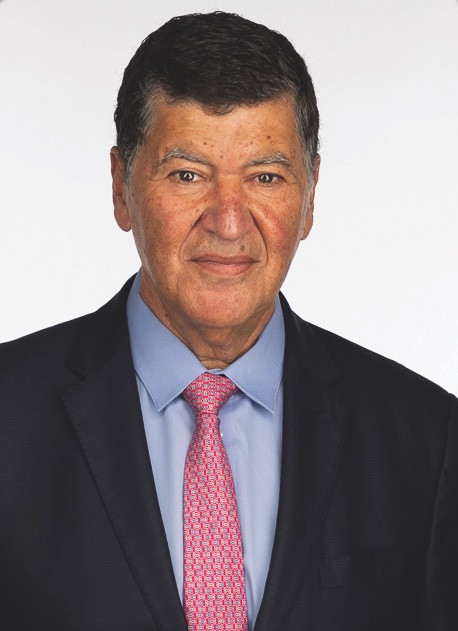
George Yancopoulos
Co-Founder, President and Chief Scientific Officer, Regeneron Pharmaceuticals

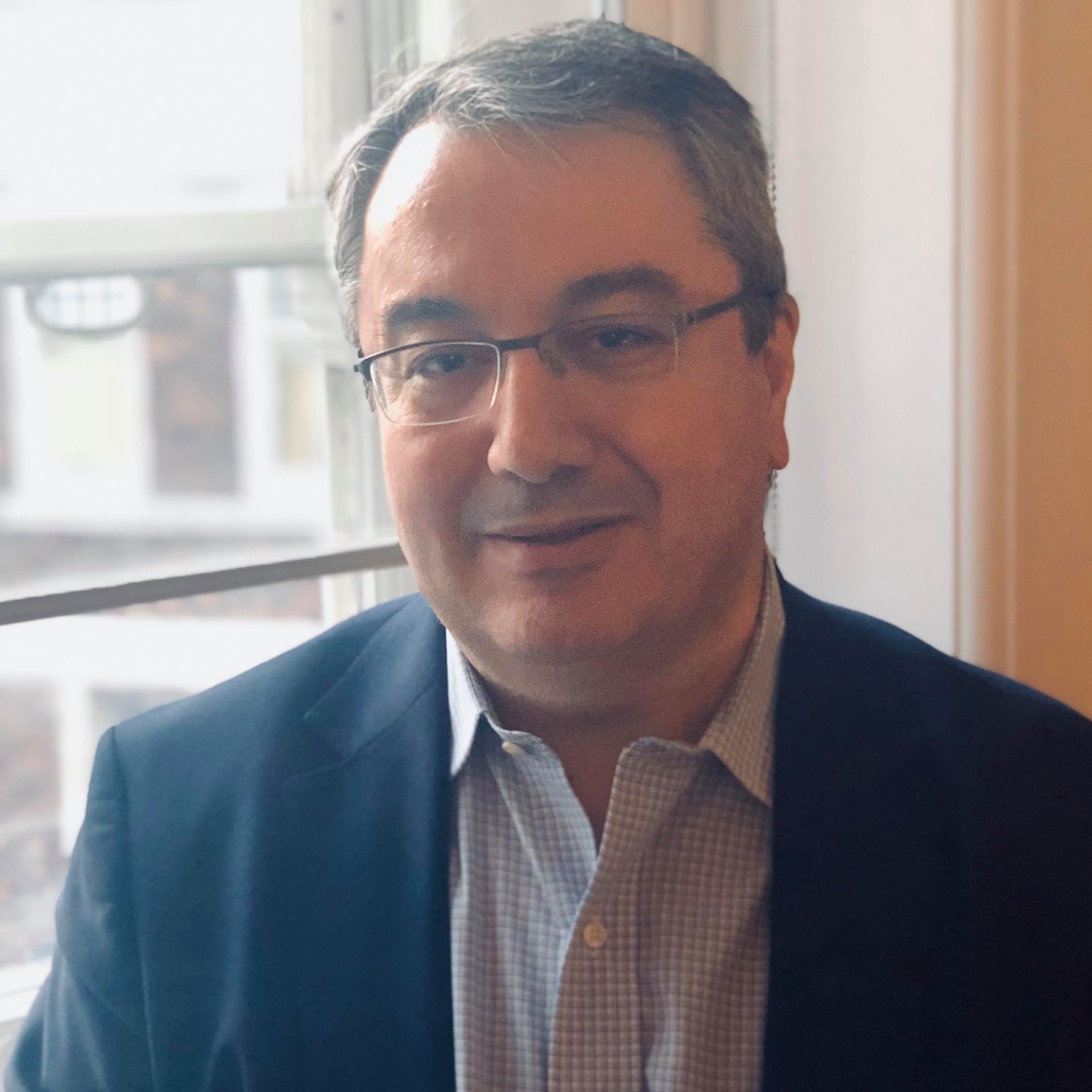
Stelios Papadopoulos
Chairman, Biogen, Exelixis and Regulus Pharmaceuticals

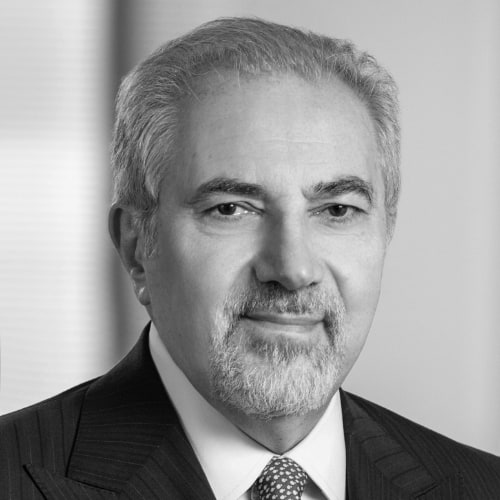
Elias Zerhouni
Former Director, National Institutes of Health (NIH)

Elias Mossialos
Professor of Health Policy, London School of Economics

Who the
Speakers are:

Speakers

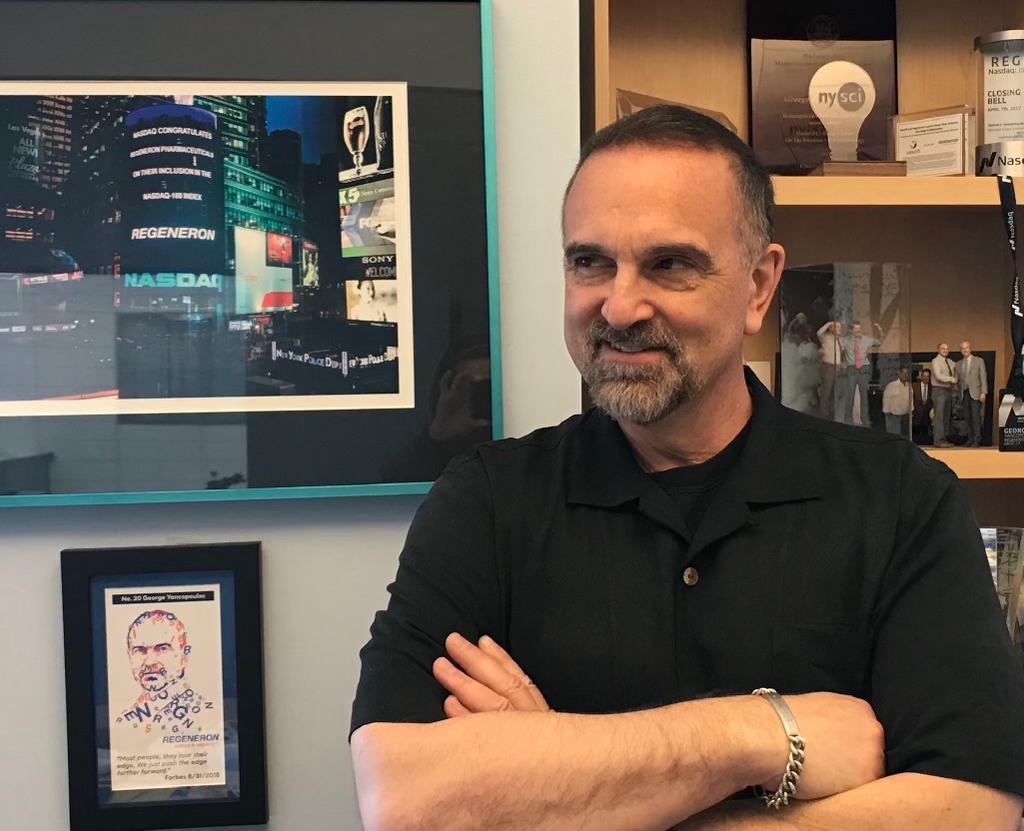
  • George Yancopoulos
    George Yancopoulos
    Co-founder, President, and Chief Scientific Officer of Regeneron Pharmaceuticals

    George Yancopoulos is a Greek-American biomedical scientist, inventor, and biotechnology executive, widely regarded as one of the leading innovators in modern drug discovery. He is the co-founder, President, and Chief Scientific Officer of Regeneron Pharmaceuticals, where he has played a central role in building one of the world’s most successful biotechnology companies focused on antibody-based and genetic medicines.

    Dr. Yancopoulos earned his undergraduate, medical, and doctoral degrees from Columbia University, where he developed an early interest in molecular biology and translational medicine. Over his career, he has led the discovery and development of numerous breakthrough therapies, including treatments for retinal diseases, inflammatory disorders, cancer, and infectious diseases. Under his scientific leadership, Regeneron developed landmark medicines such as Eylea and Dupixent, as well as a rapid antibody therapy response during the COVID-19 pandemic.

    An inventor on hundreds of patents and author of many scientific publications, Dr. Yancopoulos is recognized internationally for advancing technologies that accelerate the transformation of basic scientific discoveries into life-changing therapies for patients worldwide.

  • Stelios Papadopoulos
    Stelios Papadopoulos
    Chairman of the Board of Directors of Biogen, Exelixis, and Regulus Therapeutics

    Dr. Stelios Papadopoulos is Chairman of the Board of Directors of
    Exelixis, Inc. and Epikast, Inc., and a member of the board of Ovid
    Therapeutics, Inc. He is a co-founder of Exelixis and Epikast, as well as co-
    founder and former Chairman of Anadys Pharmaceuticals (acquired by
    Hoffman–La Roche in 2011) and Cellzome (acquired by GlaxoSmithKline in
    2012). Until June 2023 Dr. Papadopoulos was the Chairman of Biogen and until
    June 2025, he was Chairman of Regulus Therapeutics, Inc. (acquired by
    Novartis in 2025) having joined both boards in 2008. In the not-for-profit
    sector, Dr. Papadopoulos is co-founder and Chairman of Fondation Santé
    (www.fondationsante.org), a foundation providing research support and
    mentorship to biomedical research scientists in Greece and Cyprus.
    Dr. Stelios Papadopoulos spent six years (2000-06) at Cowen & Co., LLC,
    most recently as Vice Chairman, where as an investment banker he focused on
    the biotech and pharma sectors. Prior to joining Cowen, he spent 13 years as
    an investment banker at PaineWebber, Incorporated where he was most
    recently Chairman of PaineWebber Development Corp., a PaineWebber
    subsidiary focusing on biotechnology. He joined PaineWebber in 1987 from
    Drexel Burnham Lambert where he was an analyst in the Equity Research
    Department covering the biotechnology industry. Prior to Drexel, he was the
    biotechnology analyst of Donaldson, Lufkin & Jenrette.
    Before coming to Wall Street, Dr. Papadopoulos was on the faculty of the
    Department of Cell Biology at New York University School of Medicine. He holds
    an M.S. in physics, a Ph.D. in biophysics and an M.B.A. in finance, all from New
    York University.
    Dr. Papadopoulos was born in Thessaloniki and graduated from E’ Arrenon
    High School in 1966. He started his university studies in the Electrical
    Engineering Dept. of the National Technical University (Metsovion Polytechnion)
    but left for the United States in the middle of his first year to continue his
    studies in mathematics and physics.

  • Elias Mossialos
    Elias Mossialos
    Cheng Yu Tung Chair in Global Health, LSE Health Director

    Elias Mossialos is Cheng Yu Tung Chair in Global Health and Director of LSE Health. He was the founding Head of the Department of Health Policy. His primary research focus revolves around health systems and policy, with particular emphasis on healthcare financing, accessibility, quality, regulation, AI and digital health, pharmaceutical policies, AMR, and cancer and CVD care and policy.

    Professor Mossialos has made significant theoretical and practical contributions across health policy, financing, and regulation. He developed the Options Market for Antibiotics (OMA), using financial call options to incentivize antibiotic R&D through early funding and guaranteed purchases while decoupling profits from sales volume. He pioneered cure-backed securities (CBSs), adapting securitisation to healthcare by structuring performance-based annuities for gene therapies. His research established theoretical foundations for health crowdfunding and community-based health insurance in low-income countries, integrating social capital theory with health financing analysis. He demonstrated how EU law profoundly shapes national health systems despite subsidiarity, and developed frameworks bridging institutional and political analysis to explain EU pharmaceutical policy-making. His research on healthcare quality revealed that off-hours hospital admissions increase mortality, while his oncology drug assessments questioned whether efficacy claims reflect real-world effectiveness. His work has been translated into Japanese, Russian, Chinese, Greek, and Spanish, comprising over 400 publications across public policy, health policy, health economics, and political science.

    In 1998, Professor Mossialos co-founded the European Observatory on Health Systems and Policies, a major health policy research and knowledge transfer programme partnering the World Health Organization Regional Office for Europe, the European Commission, the governments of Austria, Belgium, Finland, Ireland, Netherlands, Norway, Slovenia, Spain, Sweden, Switzerland, and the United Kingdom, the French National Health Insurance Fund, the Veneto Region of Italy, the Health Foundation, LSE and LSHTM. He is currently Co-Director. He has been profiled in both the Lancet and BMJ, and co-chaired the LSE-Lancet Commission on the future of the UK NHS and the WHO Review Panel of the overall programme review of the global strategy and plan of action on public health, innovation and intellectual property.

    He has direct government experience, having served in Greece as Member of Parliament (2009-12) and Minister of State (2011), chairing the Parliament’s Special Permanent Committee on Monitoring the Social Security System. Professor Mossialos has actively participated in policy debates, advising the World Health Organization, European Parliament, European Commission, World Bank, UK Office of Fair Trading, and Ministries of Health and Social Affairs in Austria, Belgium, Brazil, China, Cyprus, Finland, Greece, Ireland, Kazakhstan, Kuwait, Netherlands, Russia, Singapore, Slovenia, South Africa, Spain and Sweden, as well as health insurance funds in Croatia, France, Hungary and South Korea. He served on the management board of the European Medicines Agency (2000-2003) and contributed to the International Forum on ‘Common access to health care services’ coordinated by the health ministers of Sweden, the UK and New Zealand. He served as senior adviser during the Belgian EU Council Presidencies in 2001 and 2010, focusing on EU law’s impact on health systems, and during the Swedish Presidencies in 2009 and 2023 and Dutch Presidency in 2016, emphasizing Antimicrobial Resistance. In recent years he was engaged by the State Council in China to advise on pharmaceutical policy reform, offered insights to the Austrian government on health insurance reform, and served as senior fellow to the Ministry of Health in Singapore.

    In 2020-21 he was Scientific Director of the Pan-European Commission on Health and Sustainable Development, an independent group convened by WHO and chaired by former Italian Prime Minister Mario Monti, to rethink policy priorities in light of the pandemic. His proposal to opt for value-based purchases of intellectual property rights or licenses from pharmaceutical companies for COVID-19 vaccines was identified by Politico as the best option going forward. He advised the Greek Government on pandemic management and played an important role in communicating complex scientific issues to the public through regular media engagement.

    In 2010, he received the Andrija Stampar medal from the Association of Schools of Public Health in Europe (ASPHER) for contributions to European public health. Other awards include the 2021 Choice Award for Outstanding Academic Title, the 2002 and 2007 Baxter Awards for best publication in health policy and management in Europe, the 2022 Helen-Clark-JoPPP Award for Pharmaceutical Policy and Practice Research, and a Commended Prize in the 2002 BMA Medical Book Competition. In 2009, under his directorship, LSE Health received the Queen’s Anniversary Prize for Higher and Further Education. He has been awarded Honorary PhDs by eight Greek universities: Athens, Aristotle University of Thessaloniki, and the Universities of Crete, Ioannina, Thessaly, Peloponnese, West Attica, and Democritus University of Thrace.
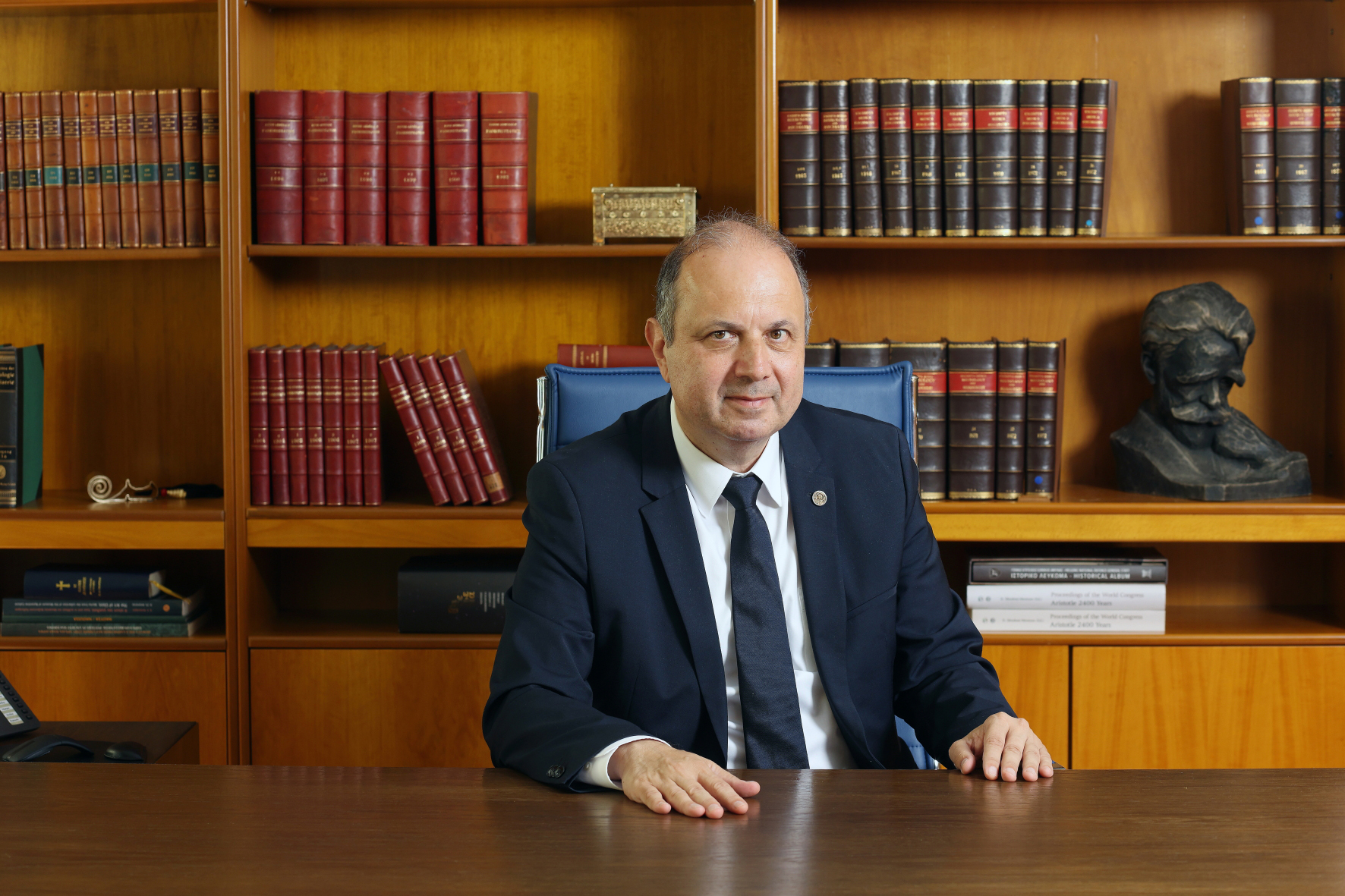
  • Kyriakos Anastasiadis
    Kyriakos Anastasiadis
    Rector of Aristotle University (AUTH) & Professor of Cardiac Surgery

    Kyriakos Anastasiadis, Professor of Cardiac Surgery, is the Rector of the Aristotle University of Thessaloniki since 2025.
    He obtained his MD from Aristotle University of Thessaloniki in 1991 and his doctoral thesis (PhD) in 2004. Since 2011 he serves as Head of Cardiothoracic Department at AHEPA University Hospital in Thessaloniki. In 2017 he was elected Deputy Head and between 2020-2024 he served as Head of the Aristotle University School of Medicine and President of the Biomedical Research and Education Special Unit.
    Kyriakos Anastasiadis is a pioneer and key-opinion-leader in the field of minimal invasive extracorporeal technologies, founder of Minimal Invasive Extracorporeal Technologies International Society (MiECTiS). Moreover, he founded in 2015 the Postgraduate Course on Extracorporeal Technologies at the Aristotle University of Thessaloniki School of Medicine, which is the only accredited program in Greece by the respective European Board. He is fellow of the European Board of Thoracic and Cardiovascular Surgery (FETCS), the European Society of Cardiology (FESC), and the American College of Chest Physicians (FCCP). He has been appointed as President of the National Boards of Cardiothoracic Surgery for Northern Greece.
    He has edited 8 books and more than 16 book chapters, while he authored numerous publications which received more than 3,000 citations. He obtained the Best Innovator Award by the Royal Society of Medicine in 2010 and a Honorary Distinction by the Director of Cardiac Centre in Mauritius, Africa after completion of a humanitarian philanthropic mission. He was recognized by the Greek Reporter as one of the Greeks Who Left their Mark in 2018.

  • Elias Zerhouni
    Elias Zerhouni
    President of OPKO Health

    Elias Zerhouni (born April 12, 1951, in Nedroma, Algeria) is an Algerian-American radiologist, biomedical engineer, and scientific leader. He earned his medical degree from the University of Algiers in 1975 and later moved to the United States, where he built a distinguished academic career at Johns Hopkins University.

    Zerhouni served as the 15th Director of the U.S. National Institutes of Health (NIH) from 2002 to 2008, becoming the first immigrant to hold this position. During his tenure, he played a key role in shaping modern biomedical research policies.

    After leaving the NIH, he held leadership roles in global health and industry, including President of Global Research and Development at Sanofi (2011–2018). He also co-founded ModeX Therapeutics and later became president of OPKO Health.

    Throughout his career, Zerhouni has been recognized for his contributions to medical imaging and for advancing innovation in healthcare and biomedical research.