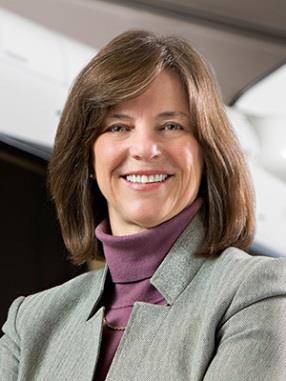

Thinking Outside the Sphere: Human Exploration of Space by Bonnie J. Dunbar – NASA Astronaut

Date

May 20 2026

Time

5:00 pm - 5:30 pm

Labels

Main Event Hall A

Location

Pavilion 15 Thessaloniki International Fair
Egnatias 154, TIF, Thessaloniki 546 36
Website
https://thessalonikifair.gr/el

For centuries, humans have dreamed of escaping the confines of gravity through flight. Greek mythology brought us the visions of Daedalus, Pegasus, Hermes and Nike. Artist and engineer, Leonardo da Vinci, translated that vision into drawings and Codex’s. But it was the 1903 flight of the Wright Brothers who finally allowed “heavier than air” flight with an engine powered airplane. Scarcely, 58 years later, both the Soviet Union and the United States launched their first astronauts into low earth orbit (LEO) and 8 years after that, two men walked on the Moon. Ten more astronauts would walk on the Moon by 1972.  The focus then changed to LEO orbiting space stations and transportation vehicles. Salyut, Skylab, and the International Space Station remained in orbit for years.  The reusable Space Shuttle flew 135 flights over 30 years, retiring in 2011.  Thousands of experiments in human, biological and physical sciences advanced technology in support of future human space exploration. In 2018, the US again set its sights on both the Moon and Mars. On April 1, 2026, the Artemis II mission with 4 astronauts in the Orion space capsule orbited the Moon once again. The pathway forward in this century has been set. Dr. Dunbar will share her perspective on human space exploration through her own five space shuttle flights and involvement in NASA strategic planning and put forth the vision of a future in which many nations will participate in human space exploration through the Artemis Accords..

Who the
Speakers are:

Speaker

  • Bonnie J. Dunbar
    Bonnie J. Dunbar
    Director, Aerospace Human Systems Laboratory (AHSL) Director, Anthony Wood Artificial Gravity Laboratory Texas A&M University, College Station, TX

    Dr. Dunbar is a retired NASA astronaut and engineer on the faculty of the Aerospace Engineering Department at the Texas A&M University, with a joint appointment to the Texas A&M School of Medicine. Her laboratory, the Aerospace Human Systems Laboratory (AHSL), engages in research related to human space systems, such as spacesuits and habitats; the physiological effects of partial gravity; and the study of partial gravity fluid physics as applied to space exploration engineering. She is project manager for the Anthony Wood Artificial Gravity Laboratory which utilizes a short arm centrifuge to investigate the effects of reduced gravity on human physiological systems. In the 1970’s, Dunbar was a production engineer in thermal protection systems for The Rockwell International Space Division Company, building the Space Shuttle Columbia. She worked for 27 years at NASA, as a flight controller and as a mission specialist astronaut, where she flew five space shuttle flights, logging more than 50 days in space. For her flight service, she received numerous medals and was elected to the Astronaut Hall of Fame. As a member of the NASA Senior Executive Service (SES), she served for 7 years in various NASA leadership and management roles. Upon retiring from NASA, Dunbar was selected President and CEO of The Museum of Flight in Seattle, where she established a new Space Gallery and expanded its K12 STEM educational offerings. She also was a founding member of the Aviation High School on museum grounds. This was followed by an appointment as M.D. Anderson Professor of Mechanical Engineering at the University of Houston where she established a STEM Center and was Director of the SICSA Space Architecture Program. Dunbar holds B.S. and M.S. degrees in ceramic engineering from the University of Washington and a Ph.D. in mechanical/biomedical engineering from the University of Houston; is a Fellow of the American Ceramic Society, the American Institute of Aeronautics and Astronautics, the Royal Aeronautical Society and is an IAA Academician. She was selected to the Royal Society of Edinburgh and to the US National Academy of engineering; elected as the President of the Association of Space Explorers (ASE) twice; in 2020, was selected for the National Sigma Xi John P. McGovern Science and Society Medal and recently selected to the Texas Women’s Hall of Fame.