


Academic Strategy and Administrative Innovation: Constantin Caratheodory (1873–1950) as the Architect of the “Restart” at Aristotle University of Thessaloniki (1930–1932) – Thanassis Christou

Date

May 18 2026

Time

4:00 pm - 4:30 pm

Labels

Main Event Hall B

Location

Emilios Riadis Hall, Thessaloniki International Fair
Egnatias 154, TIF, Thessaloniki 546 36

Konstantinos Carathéodory was one of the most emblematic figures of the Greek and European mathematical community of the twentieth century, not only because of his contribution to his scientific field, but also because of his decisive role in the administrative and academic reorganisation of higher education in Greece. Of particular significance was his activity at the Aristotle University of Thessaloniki during the period 1930–1932, when he assumed a leading role in the “relaunch” of the institution as government commissioner.

His objective was to establish a modern academic environment that would link teaching with research and promote excellence as a fundamental principle of institutional operation. Through this strategy, he sought to strengthen the autonomy of Aristotle University at a time when, in its early years, the institution faced considerable difficulties arising from the political turbulence of the period. By way of illustration, one may mention the abolition, by decree of D. Aiginitis, of Law 3341 of 14 June 1925 of the Michalakopoulos government, “On the Establishment of a University in Thessaloniki,” only one year after its enactment, and the subsequent subordination of Aristotle University to the Academy of Athens.

His contribution to the formulation of University Law 5343 of 23 March 1932 was also of major importance. This law governed the fortunes of Greek Higher Education Institutions for half a century, until the introduction of Framework Law 1268 in 1982.
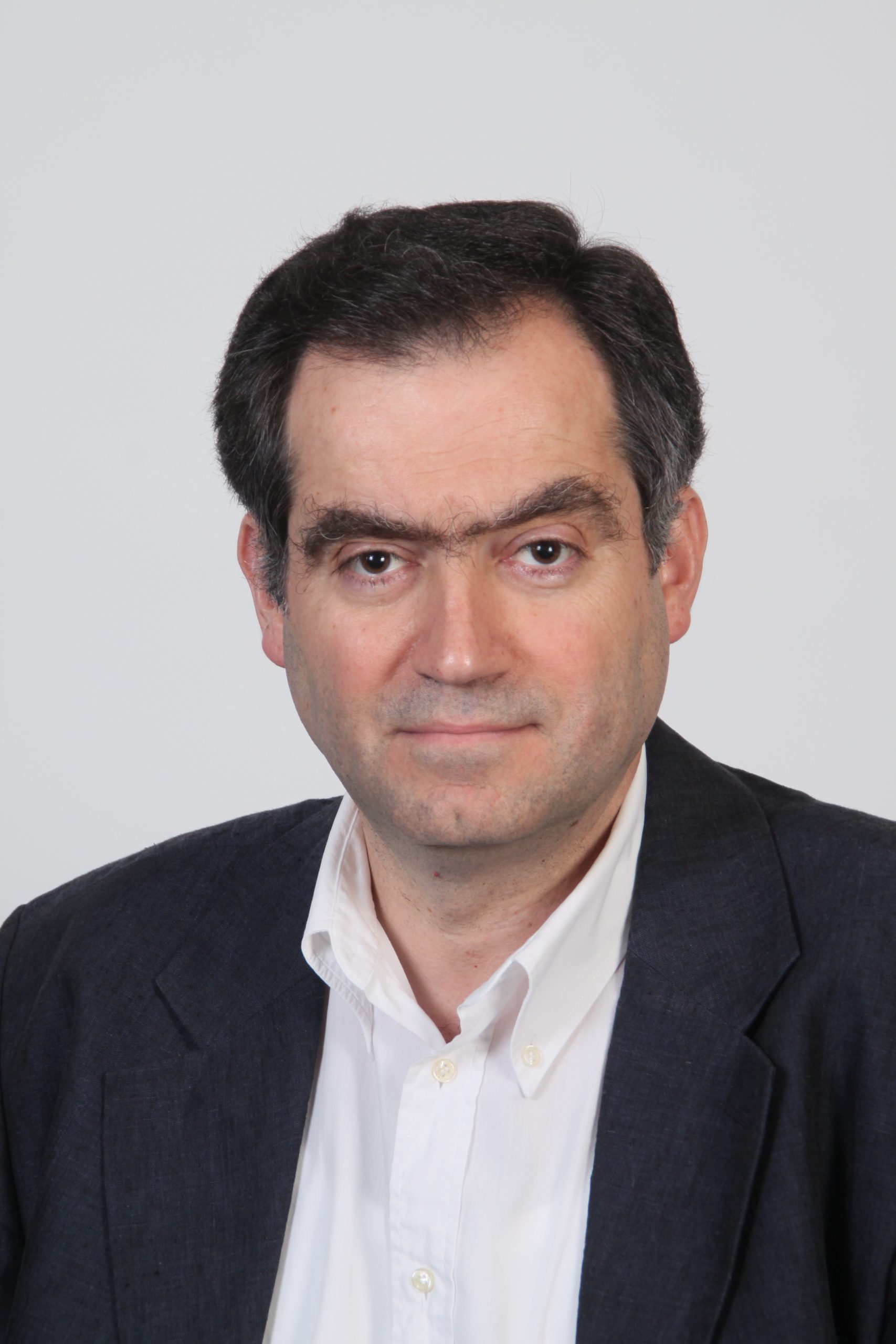
Who the
Speakers are:

Speaker

  • Thanassis Christou
    Thanassis Christou
    Professor of Modern and Contemporary History and Head of the Department of History, Archaeology and Cultural Resources Management of the Faculty of Humanities and Cultural Studies (Kalamata), University of the Peloponnese.

    Thanassis Christou is Professor of Modern and Contemporary History and Head of the Department of History, Archaeology and Cultural Resources Management of the Faculty of Humanities and Cultural Studies (Kalamata), University of the Peloponnese. He was born in 1963 in Thespies of Thebes where he completed his general education and subsequently continued with his studies in Modern and Contemporary History at the Philosophical Faculty of the Universities of Thessaloniki, Munich and Athens.
    His studies and articles focus on the history of the Modern Greek State (from 1830 to the present) and specifically the formation of the political institutions, the foundation of the University of Athens, the development of the students’ movement, and the writing of biographies of important personalities who influenced Greek society. One of his most recent research interests is the highlighting of the unknown aspects of the history of the German occupation and Greek resistance according to the German archives. Also, he focuses on the formation of the ideological currents in Greece as well as in Europe during the 19th, 20thand 21stcentury.
    His scientific work includes numerous books, studies and articles.
    In addition, he has participated in various Greek and International Conferences and is a member of several related scientific unions and societies.
    He has been teaching the course of the Modern and Contemporary History in the University of the Peloponnese since 2004.
    In September 2016, the Postgraduate Programme «Modern and Contemporary History: New considerations and perspectives», was established on Professor Christou’s own initiative, followed by the founding of the «Laboratory of Modern and Contemporary History» in February 2017, and the Summer School «Routes of Modern and Contemporary History» in July 2018. All programmes are currently operating under his authority. The Postgraduate Programme, the Laboratory of Modern and Contemporary History and the Summer School are three academic institutions aiming to train new researchers and scientists and contribute to highlighting crucial aspects of the 19th, 20thand 21stcentury Greek history in relation to the European world through the primary material of Greek and foreign archives (publications, international conferences, research programs, lectures, student exchanges etc.).